About iLabService

Building the physical context layer for AI-ready regulated science.

iLabService began with a practical belief: laboratory operations should not depend on fragmented alarms, manual checks, and after-the-fact evidence. Since 2016, the company has built software, AIoT hardware, and edge infrastructure that turn lab-floor reality into trusted operating context.

Company focus

From Smart LabOps to physical context infrastructure.

The first chapter of iLabService focused on making laboratory operations safer, more compliant, and more efficient through intelligent systems. The next chapter extends that foundation into an AIoT physical context layer: hardware captures the physical world, Sci-Edge, the edge response layer, keeps context close to the site, software governs operational responsibility, and AI systems gain trusted evidence from regulated scientific environments.

Leadership

Founder-led infrastructure company with long-cycle lab operations focus.

For investors and strategic partners, the important signal is continuity: iLabService is built by a focused team working across hardware, software, regulated deployment, and field validation.

Founder & CEO

Kenny Li

Founder & CEO of iLabService. Kenny has 10+ years of experience in laboratory operations and regulated environment management, and has led iLabService from early Smart LabOps products toward an AIoT physical context infrastructure category.

Engineering team

IoT, edge, SaaS, and deployment engineering

The team combines IoT data pipelines, edge computing, enterprise SaaS, industrial monitoring, and lab workflow knowledge to build the physical-to-operational context layer across hardware, software, and deployment environments.

Field validation network

Built with regulated lab operator feedback

Product direction is shaped by deployment feedback from lab managers, facility teams, QA/EHS reviewers, and scientific users across pharma, biotech, testing, and research environments.

Selected customers and ecosystem partners

Trusted across pharma, biotech, testing, equipment, and lab infrastructure teams.

This mix includes customer relationships in pharma, biotech, testing, and research, alongside ecosystem organizations that understand regulated samples, instruments, facilities, quality systems, and audit pressure.

Pharma and biotechSample integrity, regulated workflows, and research operations.
Testing and certificationEvidence quality, traceability, and operational assurance.
Equipment and infrastructureDevices, facilities, and lab ecosystem integration.

Company scale

Revenue-generating operations across regulated lab customers globally.

The footprint spans enterprise lab deployments, daily operators, and connected devices across pharma, biotech, research, and testing environments.

200+

Enterprise deployments

Production footprints across life science, biopharma, research, and regulated lab environments.
10,000+

Users touched by lab operations workflows

Daily operators across lab workflows, indicating the system has moved beyond single-site pilot usage.

20,000+

IoT devices deployed globally

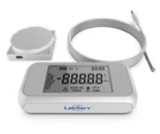
Connected devices across environmental, equipment, and workflow signal capture.

Model

Three complementary product entry points

Deployments can start with lab management software, AIoT hardware for a critical scene, or Sci-Edge for offline-first local intelligence, then expand by module, asset count, and site footprint.

OEM and white-label proof

Chosen for Thermo Fisher Scientific LabServ freezer monitoring.

iLabService provided freezer monitoring white-label service for Thermo Fisher Scientific's LabServ sub-brand, showing that the platform can meet the expectations of a global scientific equipment organization as well as end-user lab teams.

History

A decade of building lab intelligence from hardware, software, and operating evidence.

The company history shows a consistent pattern: start close to laboratory operations, build physical capture and workflow products, contribute to standards, and expand internationally.

2016

Early start

Founded in a garage in New Jersey and joined Microsoft BizSpark while exploring how lab operations could become more connected and data-driven.

2017

Product foundation

Built the early Smart LabOps product foundation, earned Microsoft Azure product certification, and began validating the platform with enterprise laboratory teams.

2018

R&D and seed stage

Expanded R&D, joined Y Combinator's summer batch, and completed seed financing to accelerate software, hardware, and lab operations product development.

2019-2020

Enterprise readiness

Passed ISO system certification, joined Microsoft Accelerator, strengthened enterprise security and deployment practices, and completed financing through Series A.

2021-2022

Standards, validation, and OEM deployment

Contributed to standards work for remote laboratory assessment and intelligent low-temperature chamber monitoring, and provided freezer monitoring white-label service for Thermo Fisher Scientific's LabServ sub-brand.

2023-2024

Category expansion and deployment growth

Continued deployment growth across Asia-Pacific, the Middle East, and enterprise pharma sites while deepening industry collaboration and participating in SWITCH 2024 as part of a broader international innovation program.

2025

International partner expansion

Signed strategic cooperation agreements with Synertec Intelligence and LabWare Group, strengthening regional deployment, systems integration, and laboratory informatics collaboration.

2026

Regional coverage and Sci-Edge launch

Business coverage extended across Asia-Pacific, the Middle East, and North America while the new Sci-Edge product line expanded iLabService from lab monitoring into an edge response layer for regulated physical context.

Global deployment readiness

Designed for regulated customers that need data-residency and validation clarity before rollout.

iLabService is headquartered in Hong Kong with operations across the US, Singapore, and Asia-Pacific. Customer and deployment activity spans North America, Europe, East Asia, Southeast Asia, and the Middle East. For US and global customers, deployment planning should define region, data residency, access control, export, retention, validation evidence, and integration boundaries before production rollout.

Deployment region

Customer-specific hosting review

Region, access, export, and retention boundaries are treated as deployment decisions rather than assumed defaults.

Validation evidence

IQ/OQ/PQ-style readiness

Configuration, sensor mapping, acceptance checks, and review artifacts can support regulated customer validation programs.

International motion

Labs first, regulated operations next

The company uses laboratory deployments as the first proof point for a broader physical context infrastructure category.

Investors and ecosystem

Backed by venture investors and innovation networks across hardware, software, and life science operations.

iLabService has received support from venture and innovation partners that understand both technical infrastructure and applied laboratory operations.

Venture investors

Matrix Partners China
Future Capital
TSVC
Y Combinator
Wisemont Capital
Liquid 2 Ventures
Fresco Capital

Ecosystem programs

Microsoft Accelerator
NVIDIA Inception Program
BLOCK71

Vision

Infrastructure for regulated physical operations.

Regulated laboratories generate enormous amounts of physical evidence every day, but most of it is not captured in a governed, computable form. LIMS and ELN systems record what people write down. Equipment vendors capture device telemetry. The missing infrastructure is the layer that connects physical state to accountability: what happened, where, when, who responded, and whether the evidence can survive an audit.

iLabService is building that layer from the lab wedge outward. The timing matters because AI for Science needs trusted physical ground truth, not only digital records. The company's deployment depth, 20,000+ device footprint, and relationships across regulated lab organizations give it a practical path to own the physical context layer before it expands into broader regulated physical operations.

Physical deployment depth

Own the real-world signal layer

Use configurable devices, gateways, adapters, and lab-native smart hardware to capture what software records alone cannot see.

Operating intelligence

Turn signals into governed context

Connect physical events to assets, locations, people, workflows, thresholds, and audit trails that teams and AI systems can trust.

Category expansion

Scale beyond the lab wedge

Use laboratories as the first proof point for a broader physical context infrastructure layer across regulated environments.