Capture physical signals
Sensors and smart devices collect the condition, status, usage, and action data that paper logs and LIMS records do not capture.
 Book demo
Products / AIoT hardware
iLabService AIoT hardware captures the lab operating records that software and cloud records miss: temperature, door status, liquid level, CO2, humidity, IAQ, pressure, current, voltage, power, barcode actions, and inventory movement. Labs can connect these devices to platform workflows when network and cloud policies allow, or route them through the edge response layer (Sci-Edge) when offline-first local intelligence is required.
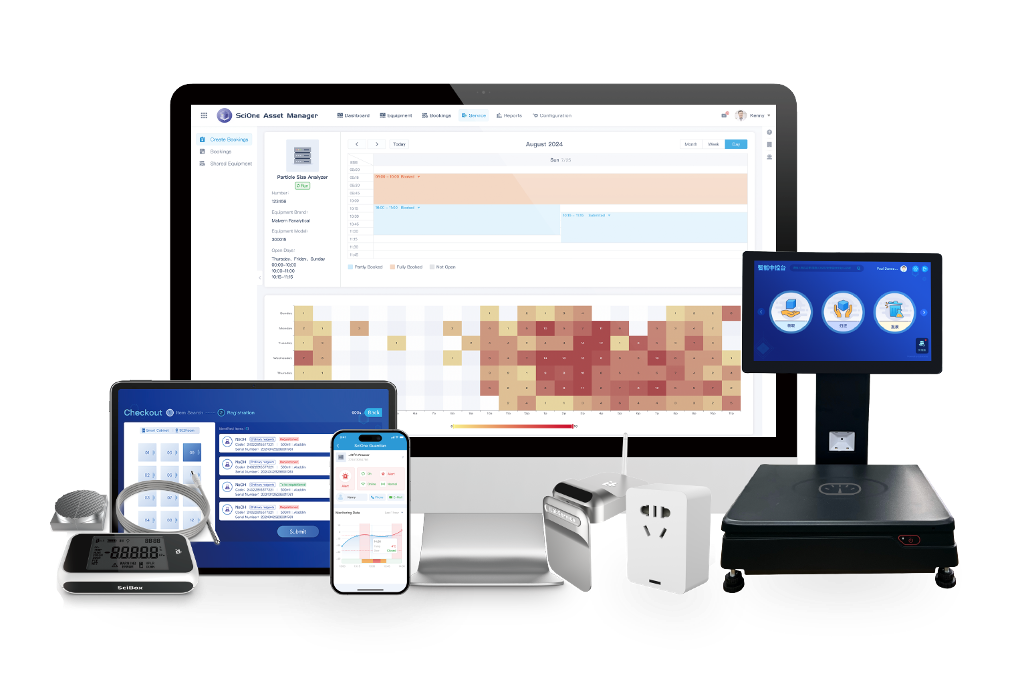
From devices to deployable scenes
The AIoT hardware portfolio is organized around seven practical deployment entry points and seven device series. Each entry point shows where the physical signal is created, then maps to the configurable hardware series that can be deployed for that operation.
Sensors and smart devices collect the condition, status, usage, and action data that paper logs and LIMS records do not capture.
SciBox, gateways, LoRa, and LoRaWAN support rooms where Wi-Fi or cloud connectivity is not the only reliable path. For offline-first edge intelligence, use the edge response layer (Sci-Edge).
Alerts, inventory actions, response records, equipment records, and audit evidence flow into Guardian, Inventory, Equipment, Space, and EHS workflows.
Operational signal capture
Lab teams often have instrument files, LIMS records, and experiment notes, but miss the real-world operating state around them. Hardware is where that missing record starts: sensors, meters, smart terminals, access devices, and inventory workflows turn lab-floor reality into structured operating evidence.
Temperature, CO2, humidity, pressure, airflow, power, door state, and equipment status become usable evidence instead of isolated readings.
Barcode scans, access events, stocktaking, weighing, handling, and corrective actions are tied to time, place, asset, and owner.
Lab signals can be reviewed, governed, and reused by platform workflows, Sci-Edge, and downstream operating reports.
Hardware to software
Guardian means "guarding the lab": it is iLabService's lab monitoring product. Sensors, SciBox, gateways, and related hardware create condition and alarm data; Guardian turns those signals into dashboards, alerts, response history, notes, and evidence records.
Sci device family
SciBox, SciSocket, SciLock, and SciStation are not separate software modules. They are configurable hardware devices that help labs connect physical signals, equipment behavior, controlled access, and inventory actions to iLabService cloud or the edge response layer.
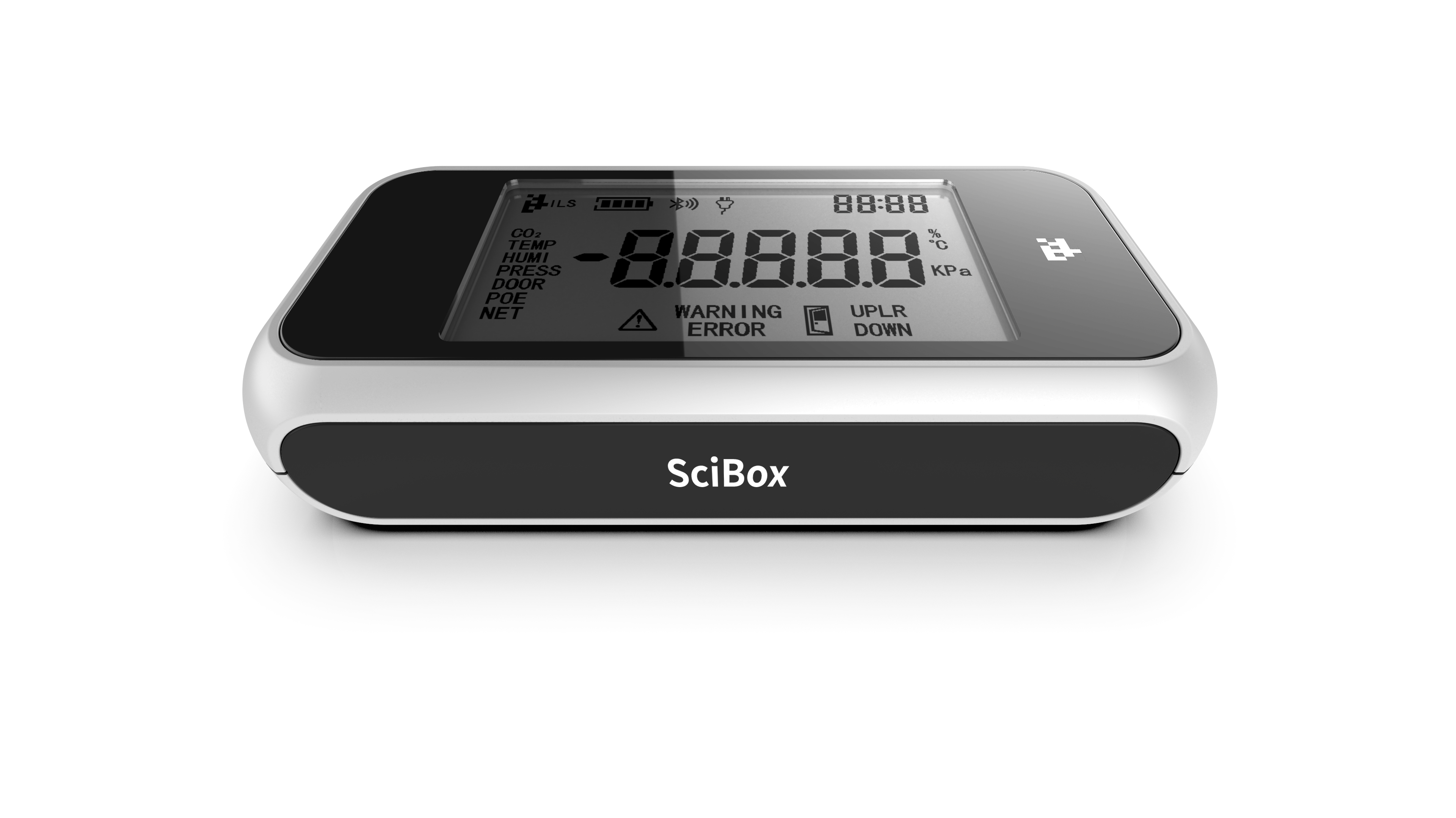
Sensors connect to SciBox through plug-and-play sensor ports. SciBox collects the readings and sends them through Wi-Fi to the iLabService cloud server or to Sci-Edge when the site needs local edge processing. When the network is unavailable, SciBox can continue local acquisition, write readings to its built-in buffer, and backfill the offline data to the cloud server after connectivity is restored.
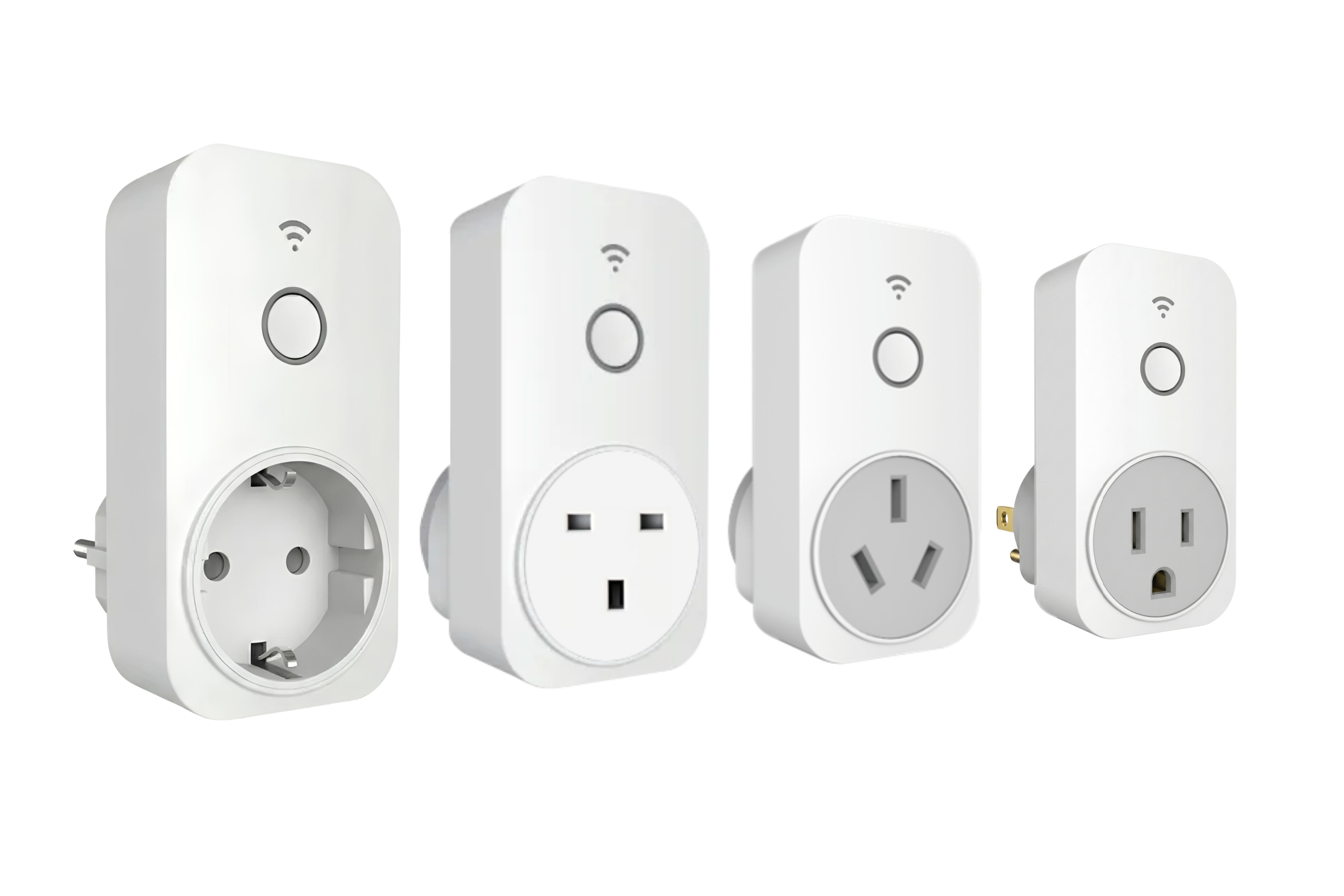
SciSocket monitors instrument power behavior, then works with iLabService's proprietary utilization algorithm to convert electrical patterns into equipment usage and utilization evidence.
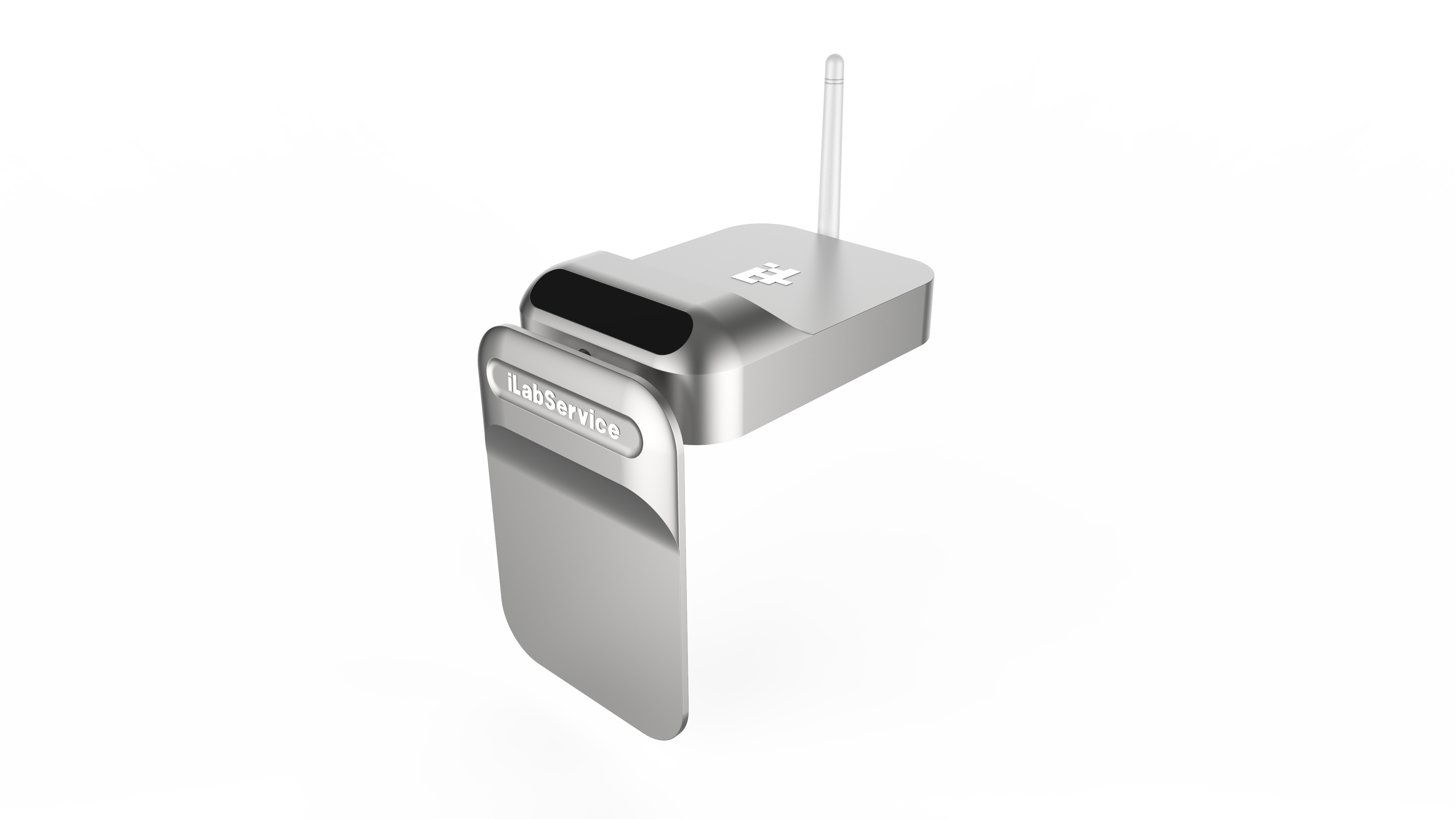
SciLock connects with Inventory and Samples workflows to control access to cabinets, boxes, and controlled storage, replacing offline physical-key management with traceable permissions.
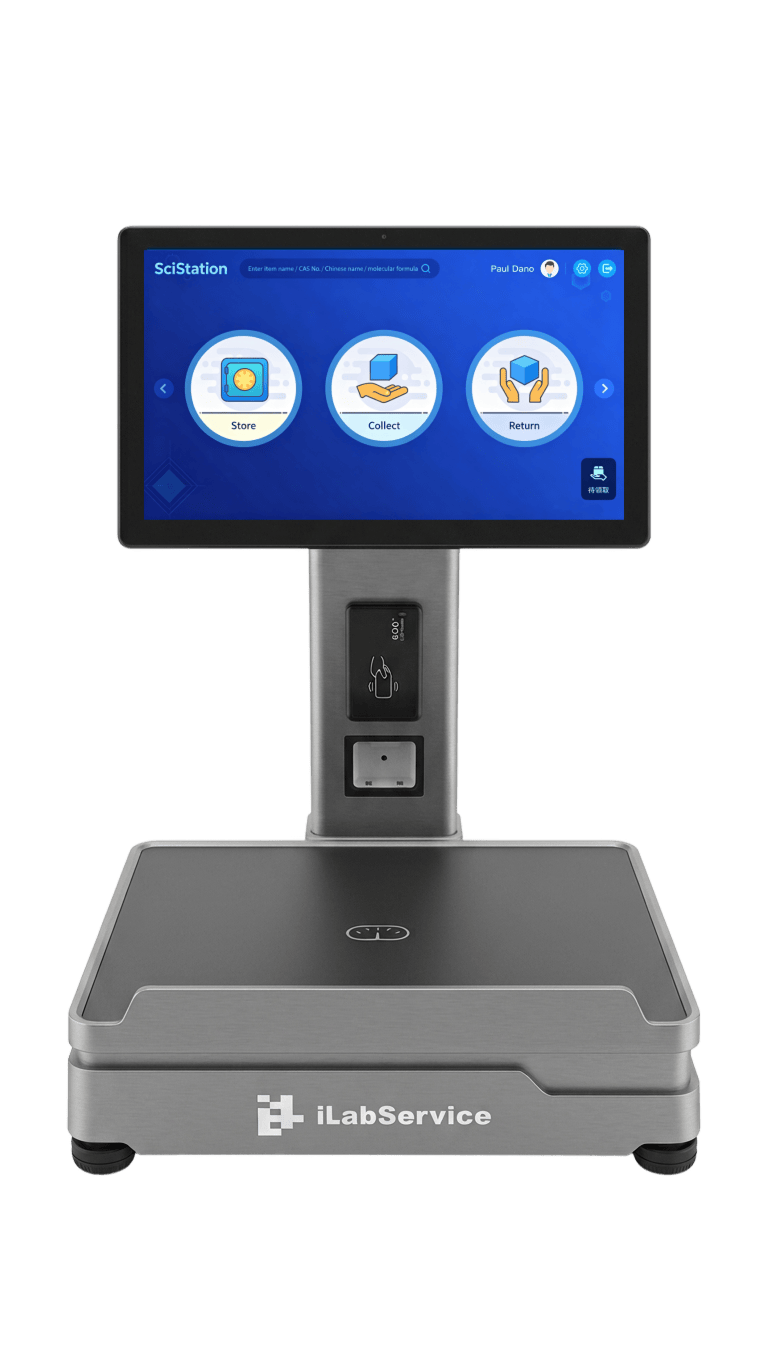
SciStation records identity, item code, and weight at the stockroom point. With SciLock, check-in, retrieval, return, stocktake, and disposal become controlled inventory records instead of manual follow-up.
Deployment entry points
Use this as a quick directory. The detailed product roles, devices, and deployment notes are in the hardware series sections below.
Fume hoods are treated as EHS containment assets, not generic room IAQ points. Typical evaluation focuses on face velocity, sash position, local alarms, response history, and safety-review evidence.
AIoT hardware series
The series below describe the configurable hardware families that turn lab conditions, equipment behavior, utility state, and inventory actions into governed operational evidence.
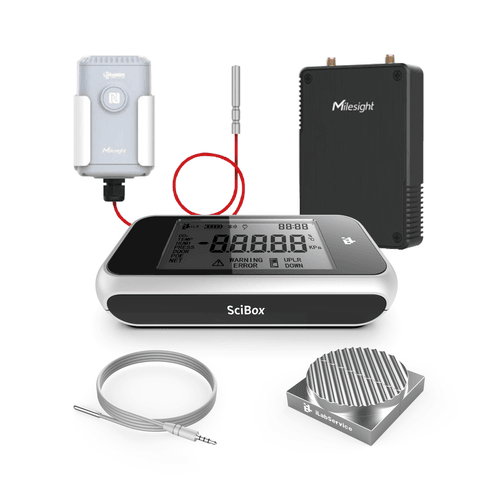
Cold storage temperature
A temperature, compressor-status, and access-monitoring bundle for refrigerators, freezers, cryogenic storage areas, transport containers, and sample storage rooms. Temperature sensors provide continuous internal readings, while SciBox can combine temperature, compressor behavior, door status, and power context so teams see early compressor risk before cooling failure becomes a sample-threatening excursion.
Freezers, fridges, cryotanks, dry-ice boxes, transport containers, sample storage rooms, and cold-chain points that need temperature history, compressor early-warning, door status, and actionable alarm context.
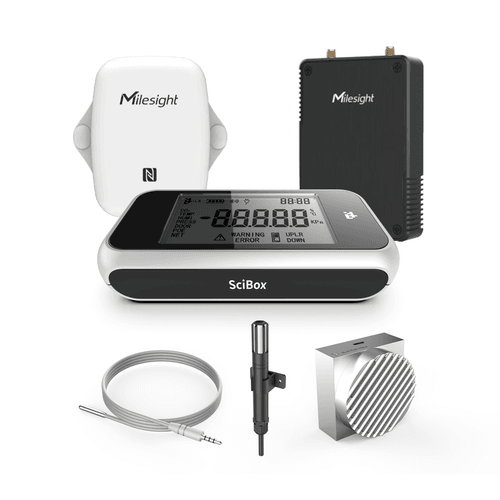
Equipment conditions
A condition-monitoring series for laboratory equipment such as incubators, shakers, chambers, and baths. It captures internal temperature, humidity, CO2, door disturbance, and power-state context where available, then routes abnormal conditions into Guardian notifications.
Incubators, shakers, chambers, and controlled equipment where CO2 drift, temperature or humidity instability, door disturbance, or power events can affect cultivation, reliability, or experiment traceability.
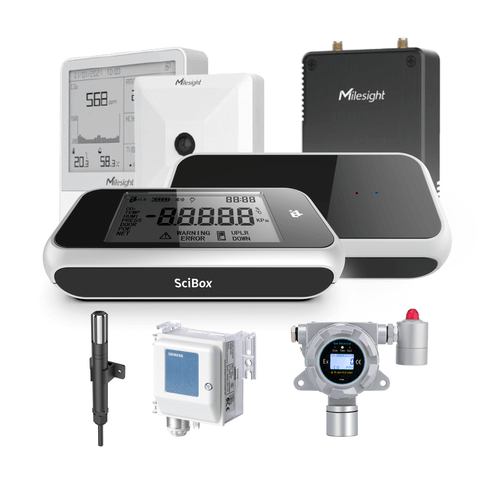
Room environments
A lab-environment monitoring series for real-time room-level conditions. It supports temperature, humidity, light, CO2, HCHO, TVOC, barometric pressure, PM2.5, PM10, motion, differential pressure, and other signals that help explain room safety and experiment context.
Labs, vivariums, cleanrooms, gas supply rooms, warehouses, and other controlled spaces that need room-level environmental evidence.
Gas and utilities
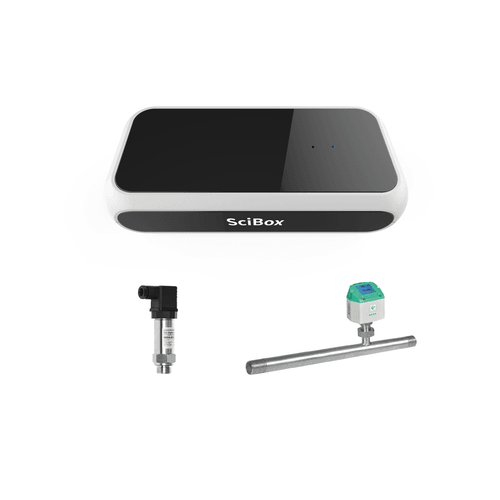
A configurable gas-safety and utility-monitoring series for rooms, cylinder areas, manifolds, and specialty gas lines. For labs that still use cylinder supply, camera-based gauge reading can recognize analog pressure-dial pointer values, trigger low-pressure alerts, and route supplier refill workflows before experiments are interrupted by an empty cylinder. It also helps EHS teams evaluate oxygen depletion or enrichment, combustible or toxic gas risk, supply pressure, leak alarms, and response evidence as one governed workflow.
Gas rooms, cylinder storage, specialty gas supply points, LN2 or cryogenic areas with oxygen-risk monitoring needs, and lab areas where manual gauge rounds, low cylinder pressure, or gas events can create safety exposure or interrupt experiments.
Gas type, gauge range, pressure threshold, detection range, calibration ownership, alarm routing, supplier handoff, and response SOPs are confirmed per deployment, because oxygen, combustible gas, toxic gas, specialty gas, and cylinder-supply use cases should not share one generic configuration.
Equipment utilization
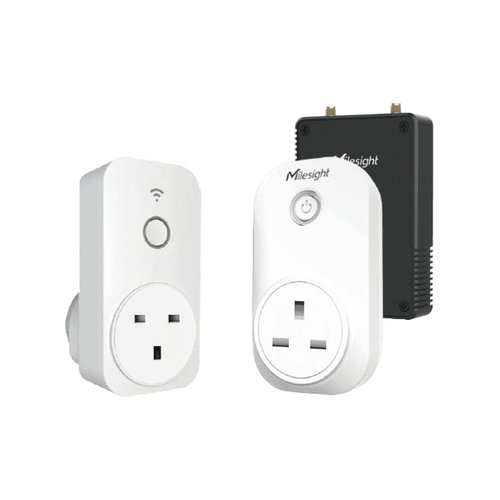
A utilization-monitoring series with Wi-Fi and LoRa product categories. SciSocket uses Wi-Fi, while Power Socket uses LoRa. Both are designed for lab environments and provide real-time voltage, current, and power data so iLabService can analyze equipment utilization, including power-pattern signals that can support freezer compressor-status monitoring.
Shared instruments, freezers, incubators, benches, and equipment fleets where usage is currently estimated from bookings, calendars, or manual observation.
Energy intelligence
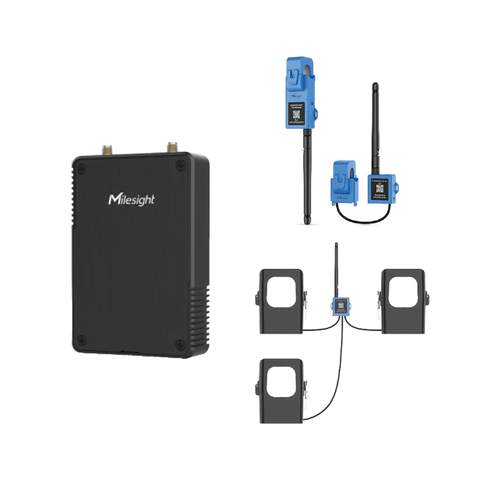
A LoRaWAN-enabled current-transformer series for remote energy monitoring and consumption analysis in single-phase and three-phase electrical systems. The detachable clamp design supports quick indoor installation without de-energizing the facility.
Electrical panels, lab zones, high-energy equipment, and sustainability programs that need non-intrusive power evidence.
Inventory workflows
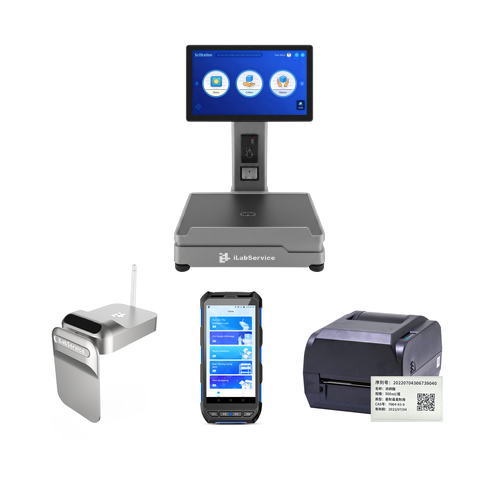
Inventory hardware for controlled material movement. SciStation anchors the stockroom workflow, while SciLock, label printers, PDAs, scanners, and lighter tablet flows cover receiving, retrieval, return, stocktaking, and disposal at the point of work.
Chemical rooms, reagent stores, consumable warehouses, sample-material interfaces, and any material workflow still dependent on spreadsheets or delayed stocktaking.
Edge-ready hardware
The AIoT hardware layer can feed platform workflows directly, or connect into the edge response layer (Sci-Edge) for offline-first local rules, agents, buffering, and edge AI compute. That is what lets a freezer alarm, a CO2 drift, an overloaded circuit, or an inventory scan become governed operational context rather than a disconnected device event.
LoRa, LoRaWAN, gateway, and local edge patterns reduce dependence on perfect Wi-Fi coverage.
Start from one storage, process, room, gas utility, equipment, energy, or inventory scene, then reuse the same stack across zones.
Explore the edge response layer for offline-first deployments, local agents, and edge AI compute.
Hardware partnership
Partner with iLabService to connect device telemetry, utilization, alarms, access, and service signals into regulated lab workflows instead of leaving them as isolated hardware data.