
Real-time LabOps infrastructure for regulated labs
Turn lab signals into audit-ready operating evidence
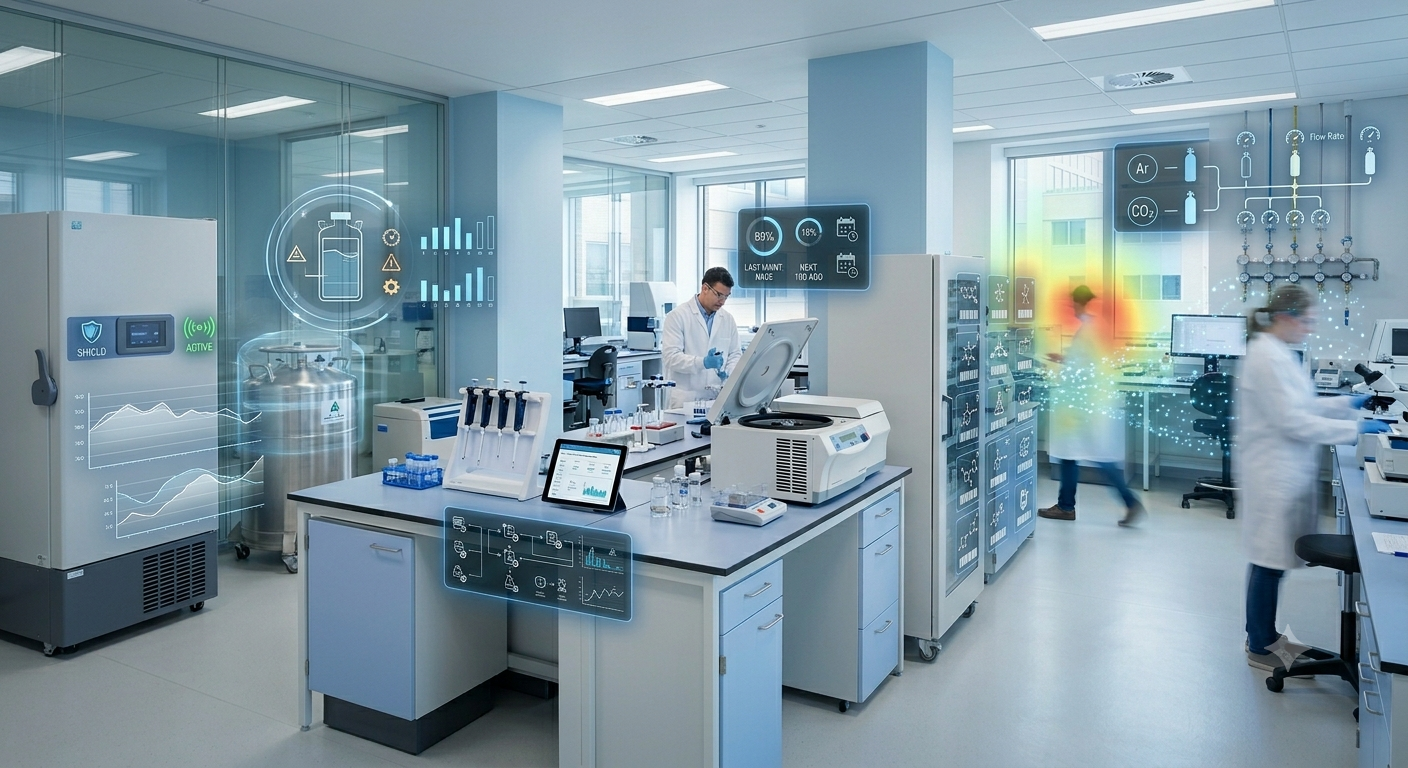
iLabService connects environmental conditions, equipment state, sample risk, people response, and compliance requirements so teams can see risk earlier, act faster, and defend every operating decision with traceable records.
24/7 monitoring and response context
Traceable workflows for QA, EHS, and LabOps
Evidence aligned with audit and validation review
Capture physical state
Normalize at the edge
Govern daily operations
Produce audit-ready evidence
Deployment footprint
200+ enterprise deployments
Active across pharma, biotech, CRO/CDMO, testing labs, and lab infrastructure teams.
Connected scale
20,000+ connected devices
Environmental, equipment, inventory, space, gas, and edge signals linked into LabOps context.
White-label proof
Thermo Fisher LabServ white-label proof
Evidence that the platform can support enterprise-grade laboratory service models.
Review design
ALCOA+ evidence design
Records are structured around attribution, contemporaneous capture, reviewability, and endurance.
Find your path
Start with the role closest to your daily pressure
Lab Manager
Control risk, CAPEX utilization, OPEX spend, and operating evidence from one LabOps view.
View lab manager path
QA / Compliance
Evaluate audit trails, ALCOA+ readiness, validation evidence, and review workflows.
Review QA path
EHS
Connect gas, oxygen safety, waste, incident, and near-miss evidence to response ownership.
Review EHS path
PI / Scientists
Trace physical conditions during experiment windows, failed runs, and reproducibility review.
Explore PI / Scientists path
Role-led overview
See what iLabService changes for every role around the lab
Follow the value paths for Lab Managers, QA / Compliance, EHS teams, PI / Scientists, and Partners, then choose the scenario closest to your daily pressure.
For ecosystem and channel partners
Take audit-ready LabOps infrastructure into more regulated labs
Build joint solutions with iLabService across equipment, LIMS and ELN, validation, integration, regional distribution, and lab automation.
Joint go-to-market
OEM and white-label paths
Reusable deployment scenarios
Product proof
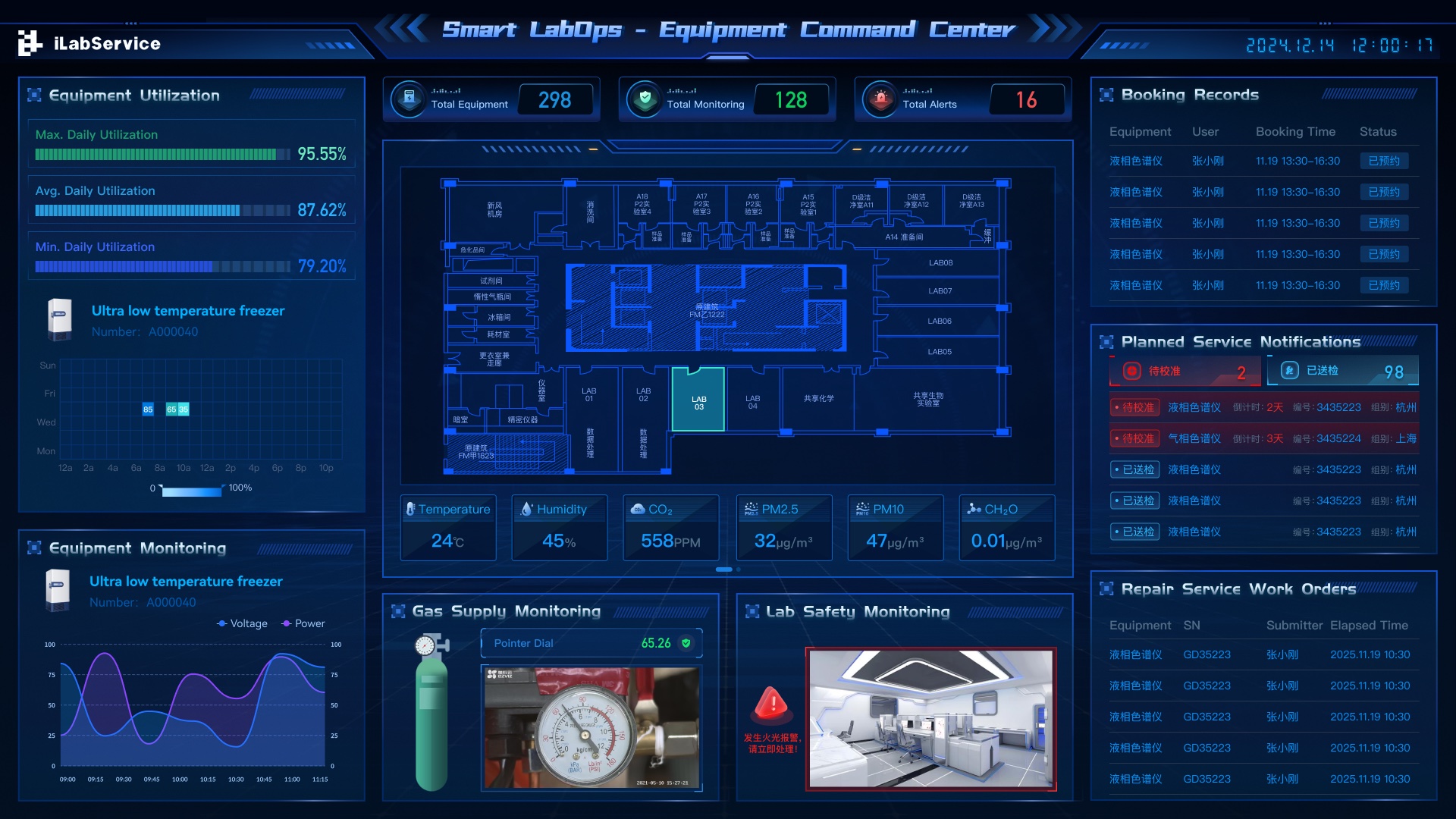
See a live LabOps dashboard
Review a demo environment with live operational views for connected lab monitoring and LabOps context. Access opens inside this website after a short work-email request.
See how lab operating records become operational evidence
The missing operating record
Why existing systems still miss critical signals
Lab operations happen in rooms, freezers, cabinets, instruments, gas systems, and human workflows. When existing systems cannot connect those signals to the work, teams manage risk with partial evidence.
Core problem
No shared operating record connects lab conditions, actions, and outcomes
The evidence may exist in devices, rooms, people, logs, and screenshots, but it is rarely captured as structured, time-aligned, audit-ready operating records.
Hidden disturbances
Drift, door, gas, power, and equipment changes appear before existing records connect the pattern.
Fragmented evidence
Logs, alarms, screenshots, LIMS records, and chat history are scattered during review.
Manual response loops
Existing workflows still rely on checks, calls, spreadsheets, supplier updates, and memory.
Disconnected root-cause evidence
Failed-run records often lack the physical conditions, operator actions, and timing needed for root-cause review.
Audit burden
Evidence is rebuilt after the fact instead of produced continuously by the operation.
Review gaps
Teams see final records without the conditions, actions, and timing behind quality and reproducibility.
Why iLabService matters
An AIoT (AI-powered IoT) lab operations platform closes this gap by capturing trusted signals, linking them to lab entities and workflows, and turning daily operations into reviewable evidence.
The 168-hour problem
A lab is staffed for about 50 hours. The other 118 hours still count
During those 118 hours, iLabService continues recording every door opening, every temperature drift, and every gas reading.
118h
outside normal lab coverage every week
Weekly coverage map
Mon-Sun · 24h/day
Mon
Tue
Wed
Thu
Fri
Sat
Sun
50hStaffed checks
118hUnattended exposure
24/7Operating record capture
Door activity and freezer recovery trend remain attached to the event.
Temperature threshold breach creates a Guardian evidence record.
Click to view packetGas and oxygen readings continue to be logged for EHS review.
Built for regulated evidence
Designed to support the records lab managers are asked to defend
iLabService should not ask teams to trust another black box. The system is designed around traceable records, controlled workflows, electronic review, and audit-ready evidence that regulated labs can align with their own SOPs and validation requirements.
Continuous operating evidence
Temperature checks, excursions, response tasks, equipment events, and corrective actions are captured as structured records instead of paper fragments.
Electronic record readiness
Support controlled access, audit trails, and electronic review and approval workflows that customers can validate against their regulated electronic-record requirements.
Validation package support
Provide deployment documentation, test evidence, and configuration records that customer QA teams can use in their validation programs.
Data integrity principles
Design records around attributable actions, legible histories, contemporaneous capture, original source context, and accurate review trails.
Testing and calibration context
Connect equipment status, calibration evidence, environmental conditions, operator actions, and sample handling context for reliable lab operations.
Faster investigation packages
Create investigation packages around a result, sample, room, instrument, or material without relying on screenshots, chat history, or memory.
Selected customers and ecosystem partners
Trusted across pharma, biotech, testing, equipment, and lab infrastructure teams
This mix includes customer relationships in pharma, biotech, testing, and research, alongside ecosystem organizations that understand regulated samples, instruments, facilities, quality systems, and audit pressure.
enterprise deployments
users touched by lab operations workflows
IoT devices deployed globally
OEM proof
iLabService provided freezer monitoring white-label service for Thermo Fisher Scientific's LabServ sub-brand.
Anonymous beverage case
Reference standards inventory control for a global beverage QA center
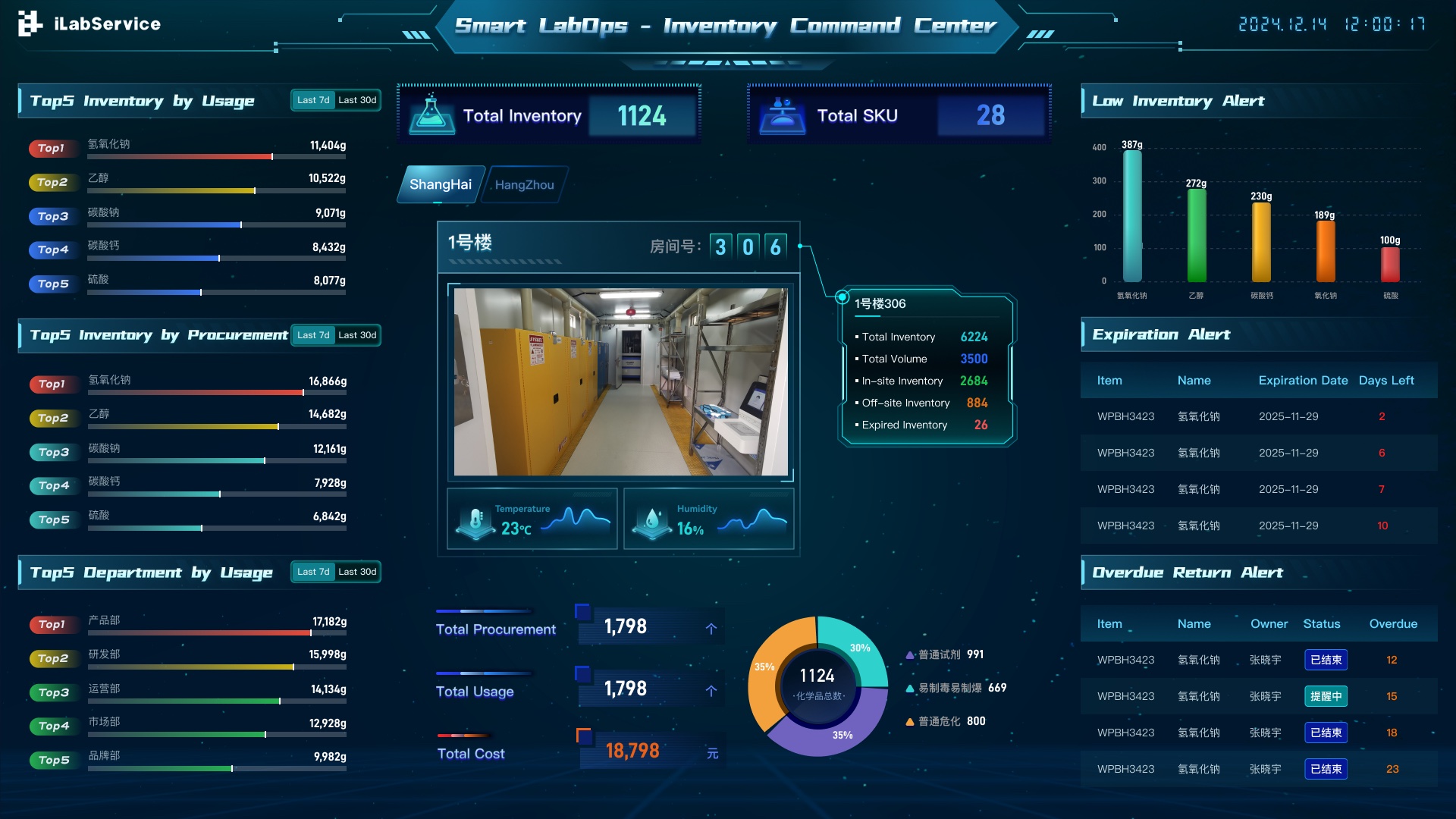
A regulated beverage quality lab used iLabService Inventory to manage 3,000+ reference standards with RFID lifecycle tracking, on-site label printing, PDA stocktaking, MSDS matching, weighing scale integration, alerts, and audit trail records.
- Inventory lifecycle control for 3,000+ reference standards with RFID identity and audit-ready custody records.
- Automated MSDS matching, on-site label printing, PDA stocktaking, and external weighing-scale integration.
- Alert rules, biometric accountability, and dashboard analytics for controlled QA storage and handling workflows.
50%less manual inventory work
200%higher stocktaking efficiency
30%lower annual procurement cost
100%audit trail coverage
Anonymous pharma case
All-in-one LabOps platform for a global pharma R&D center
A multinational pharma R&D organization connected Guardian monitoring, equipment lifecycle management, chemical inventory, dashboards, and an interactive live lab view to support GLP, global EHS, PI and scientist efficiency, and greener lab operations.
- 100+ sensors across environments, freezers, LN2 tanks, and incubators.
- Lifecycle management, sharing, and booking for 400+ instruments.
- Lifecycle control for 1,000+ chemicals with analytics and stocktaking workflows.
50%lower LabOps staffing burden
15%less lab power consumption
25%higher equipment utilization
500%higher stocktaking efficiency
20%lower annual LabOps cost
EHSinnovation award recognition
Anonymous pharma incubator case
Self-service LabOps platform for a pharma campus and incubator
A life science campus used iLabService to run shared laboratories with lean staffing, giving tenant startups self-service access to instruments, cold storage, chemical storage, training, work orders, and usage records while keeping hazardous material governance auditable.
- Guardian monitoring for environments, freezers, LN2 tanks, incubators, and smart video context.
- Equipment sharing, booking, usage tracking, training, and test workflows for tenant teams.
- Inventory control for chemicals, consumables, bio-samples, and hazardous waste records.
120k+sqm lab campus managed
20+tenant startups supported
5LabOps staff for daily operations
100%hazardous chemical compliance coverage
Anonymous CRO case
Equipment lifecycle and Guardian monitoring for a CRO operation
A contract research organization replaced fragmented equipment systems with one LabOps operating layer for asset lifecycle management, work orders, financial allocation, dashboards, automated inspections, and risk alerts across research supply-chain and logistics workflows.
- Guardian monitoring for environments, freezers, LN2 tanks, and smart video across 200+ monitored points.
- Equipment lifecycle management, sharing, booking, cost allocation, and period checks for 150,000+ assets.
- System consolidation to replace or integrate 10 existing third-party management systems.
90%higher equipment stocktaking efficiency
25%faster average work-order response
15%fewer equipment failures
30%lower equipment maintenance cost
100%period checks completed on time
2,000+daily user logins supported
Anonymous CDMO case
EMS monitoring and compliance validation for a bio-CDMO testing center
A bio-CDMO and biosafety testing center used iLabService to deploy an EMS layer for clean-room and equipment monitoring, supporting GxP, CNAS, IND/BLA submission readiness, electronic records, real-time alerting, and full CSV delivery for regulated laboratory operations.
- Guardian monitoring for temperature, humidity, pressure differential, airflow, CO2, gas concentration, incubators, freezers, LN2 tanks, and workstations.
- Continuous data capture, electronic records, traceable audit history, and 21 CFR Part 11-aligned system processing.
- Compliance services covering risk assessment, solution design, installation testing, system validation, training, and calibration support.
14sensor types covering critical lab assets
24/7continuous monitoring and data capture
CSVcompliance validation package delivered
GxPregulated lab evidence supported
Anonymous chemical case
Connected R&D operations for a global chemical innovation team
A chemical R&D organization used iLabService to replace manual research workflows and data silos with connected experiment context, instrument visibility, raw-material inventory, automated reporting, and integrated records across LIMS, ELN, ERP, and lab operating systems.
- Guardian monitoring for environmental conditions and experiment-process context records.
- Equipment and Inventory visibility for research instruments, raw materials, formulas, tasks, and costs.
- Customized LabOps modules and system integration to improve data completeness, traceability, and analytics.
15%higher R&D productivity
20%shorter product development cycle
100%R&D data completeness target reached
20%lower product development cost
20+labs connected in first expansion wave
Globalmulti-region rollout continuing
Anonymous testing lab case
Shared equipment and chemical governance for a third-party testing lab
A third-party testing organization used iLabService to connect shared instrument booking, utilization analytics, chemical and consumable lifecycle control, safety monitoring, and operating dashboards across busy laboratory teams.
- Guardian monitoring for 50+ freezers, incubators, water baths, and safety-sensitive lab assets.
- Equipment lifecycle management, utilization tracking, internal sharing, and cross-team booking for 200+ instruments.
- Inventory lifecycle control for 1,000+ chemical, hazardous chemical, and consumable SKUs with dashboard analytics.
25%higher instrument utilization
500%higher chemical stocktaking efficiency
10%lower lab energy consumption
5safety incidents prevented
200+shared instruments governed
ROIequipment return analysis enabled
Anonymous CDC case
Digital lab operations center for a public health CDC facility
A public health laboratory center used iLabService to connect compliant data capture, multi-parameter environmental monitoring, chemical inventory governance, large-screen operations visibility, and BIM/AR-enabled spatial context across a newly modernized facility.
- Guardian monitoring for 300+ environmental, airflow, pressure differential, freezer, and incubator points.
- Inventory lifecycle control for 1,500+ chemical SKUs with auditable records and traceability.
- On-premises deployment, dashboard analytics, BIM/AR visualization, and standard APIs into internal workflow systems.
50%higher compliant data-capture efficiency
7floors of lab status visualized
100+labs shown in real time
300+monitored physical points
1,500+chemical SKUs governed
APIinternal workflow integration enabled
Anonymous drug testing case
Validated monitoring layer for a drug testing laboratory network
A drug testing organization used iLabService to modernize laboratory operations across multiple sites, replacing manual checks with compliant monitoring data, mobile access, large-screen visibility, validation support, and a private deployment ready for OA integration.
- Guardian monitoring for 800+ environmental, freezer, incubator, and controlled-room points.
- Dashboard analytics and automated reporting across laboratories in different geographic locations.
- 3Q validation support, private deployment, mobile access, and standard APIs for internal systems.
50+labs connected across two sites
60%higher compliant monitoring efficiency
800+monitored physical points
100+labs visible on real-time screens
3Qvalidation service completed
APIOA integration path prepared























30 / 60 / 90-day pilot
Define the scope, customer input, and acceptance test before deployment starts
Start with one site and one workflow where a missed signal has a clear operational or compliance consequence. Each phase ends with evidence that LabOps, QA, and IT can review together.
Days 0-30
Connect one critical workflow
Delivered
Asset and signal inventory, edge connection, alert rules, owners, timestamps, and offline buffering for one selected scene.
Customer input
Site access, asset list, network contact, SOP owner, escalation path, and a weekly 45-minute review.
Acceptance criteria
Agreed signals are captured with reliable timestamps; test alerts reach the correct owner; buffered records recover after a network interruption.
Days 31-60
Prove response and evidence
Delivered
Escalation workflow, task ownership, incident timeline, audit history, and daily or weekly operating review.
Customer input
Two representative incident scenarios, response participants, QA review comments, and approval of the evidence format.
Acceptance criteria
A test event can be replayed end to end, with the signal, acknowledgement, action, escalation, and closure linked in one record.
Days 61-90
Operationalize and decide expansion
Delivered
Management metrics, validation-support artifacts, operating cadence, handover, and a prioritized multi-site or multi-workflow expansion plan.
Customer input
LabOps, QA, and IT acceptance review, named operational owner, final configuration decisions, and expansion priorities.
Acceptance criteria
LabOps, QA, and IT sign off the agreed workflow and evidence package, with gaps and the next deployment scope documented.
What we industrialize
From raw lab signals to governed operating records
Regulated labs cannot rely only on instrument files, paper logs, and after-the-fact screenshots. Teams need one operating record that shows what the environment did, which equipment was involved, where materials moved, who acted, and whether the response followed procedure.
Capture physical state
Use sensors, smart cabinets, meters, labels, adapters, and workflow terminals to capture what is happening in the lab.
Normalize at the edge
Local adapters, rules, and buffering keep records flowing when sites, networks, and equipment interfaces do not behave the same way.
Govern daily operations
Monitoring, equipment, inventory, samples, space, procurement, qualification, and waste workflows turn events into accountable work.
Produce audit-ready evidence
Lab events become structured, time-stamped, auditable records tied to assets, locations, people, samples, and actions.
Common lab scenarios
Replace manual checks with connected AIoT operating records for global labs
iLabService focuses on the lab work that still depends on people checking devices, reading gauges, updating spreadsheets, messaging suppliers, and reconstructing incidents after the fact.
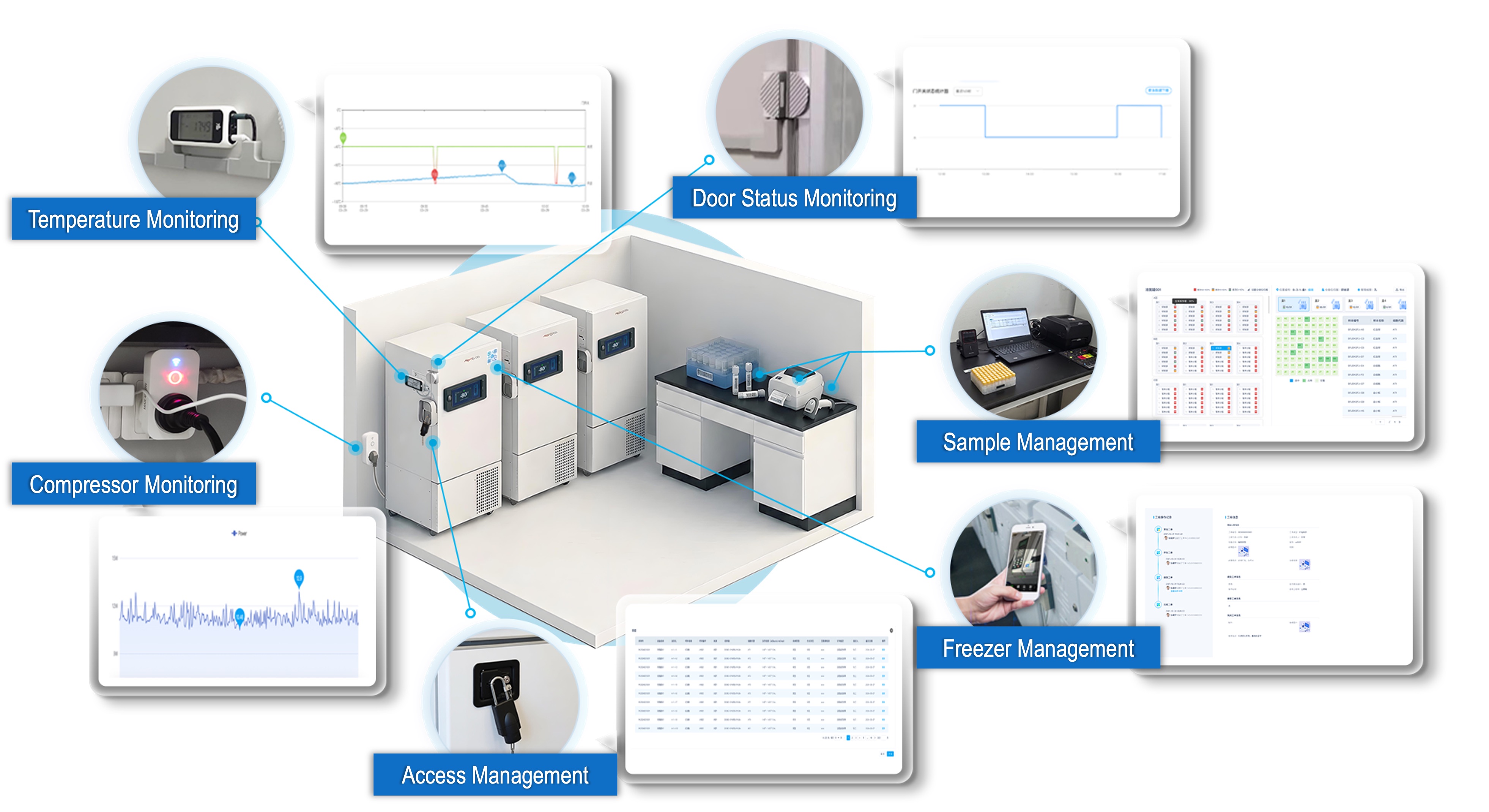
Sample protection
Freezer and biological storage
Temperature, door, power, compressor-risk, sample, access, and response context.
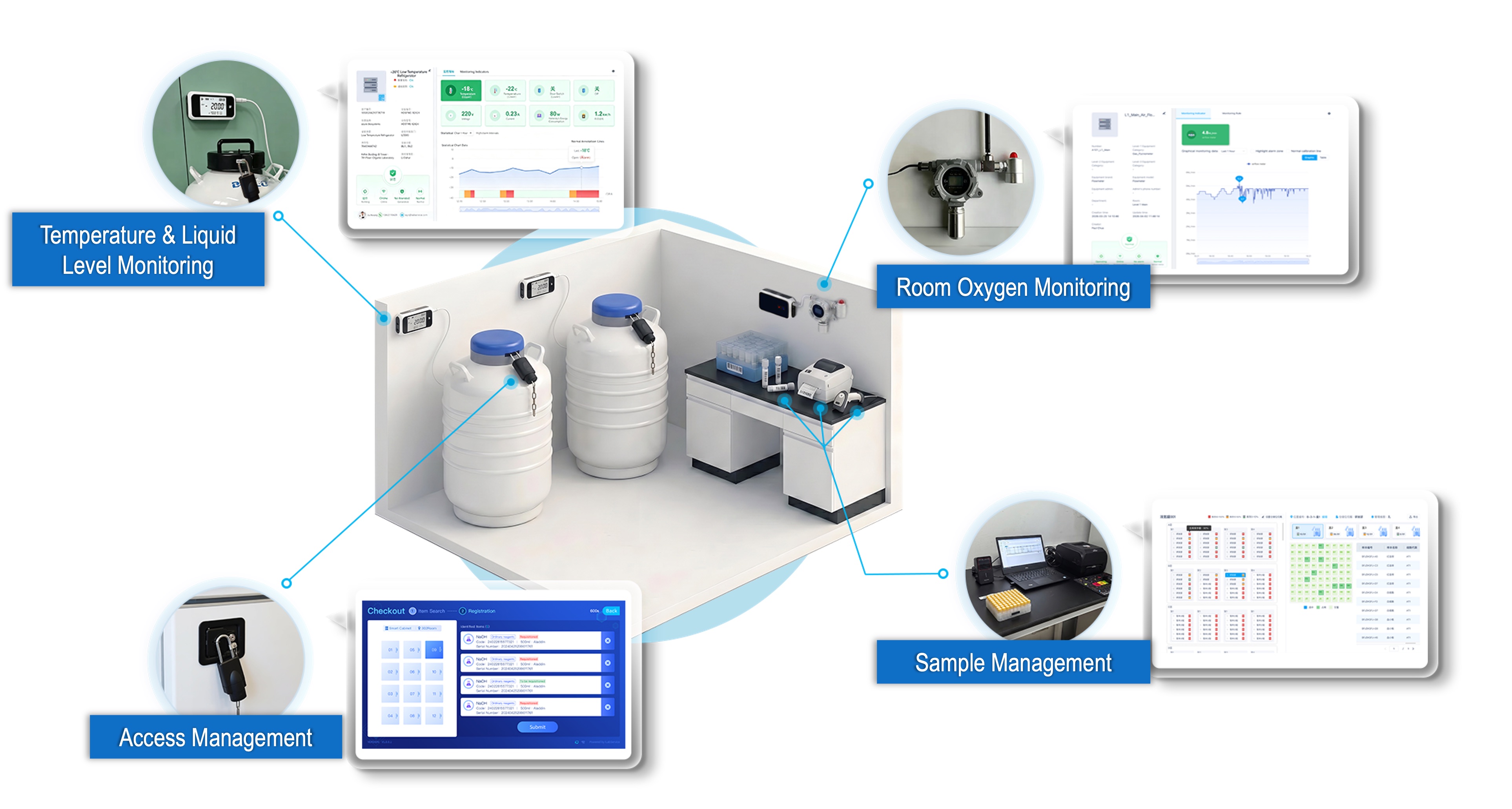
Cryogenic safety
Cryo storage and oxygen safety
Level, pressure, oxygen condition, refill, access, and safety response history.
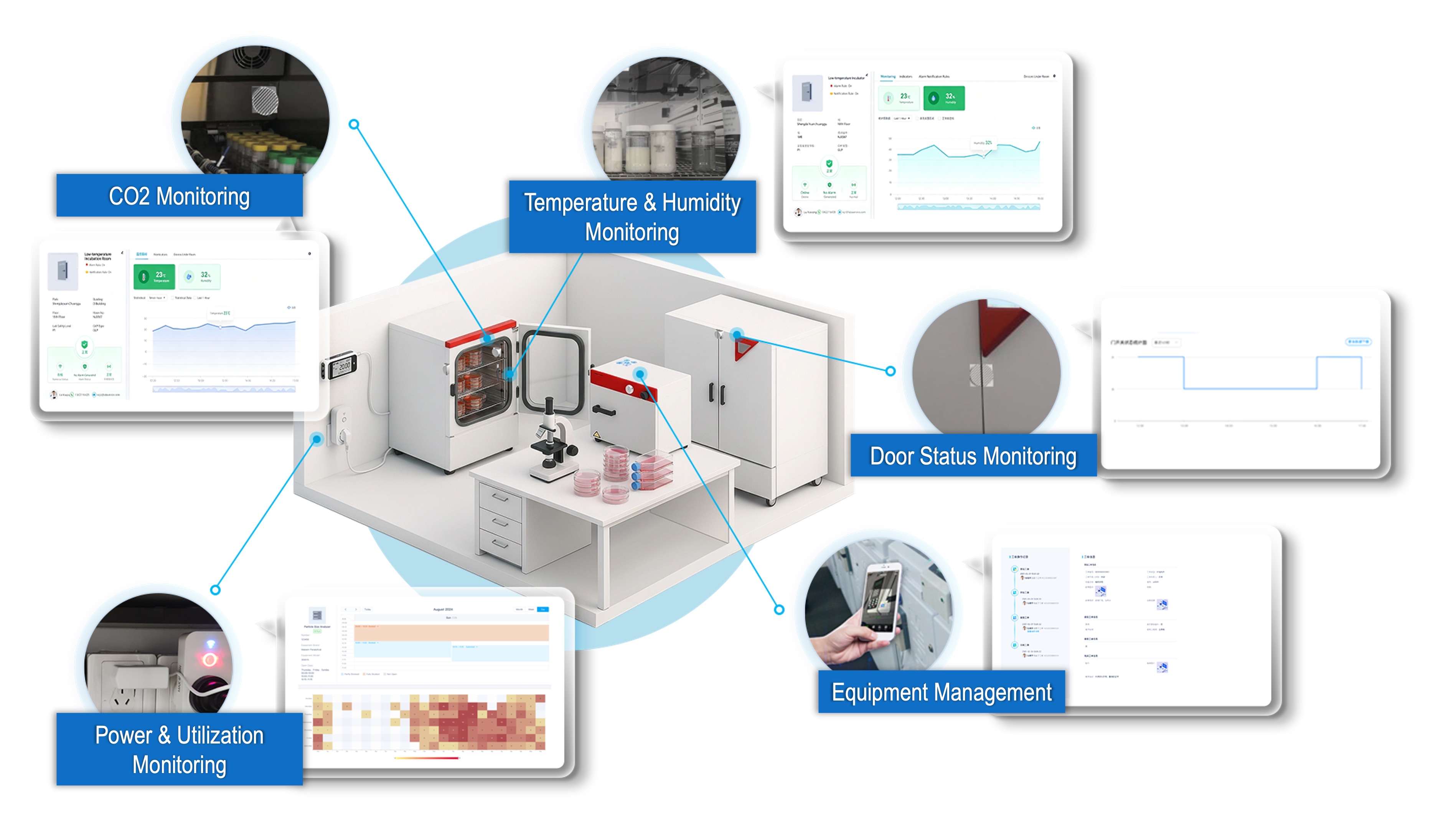
Experiment integrity
Incubators and process monitoring
Condition drift, CO2, humidity, disturbance, and methods-ready context.
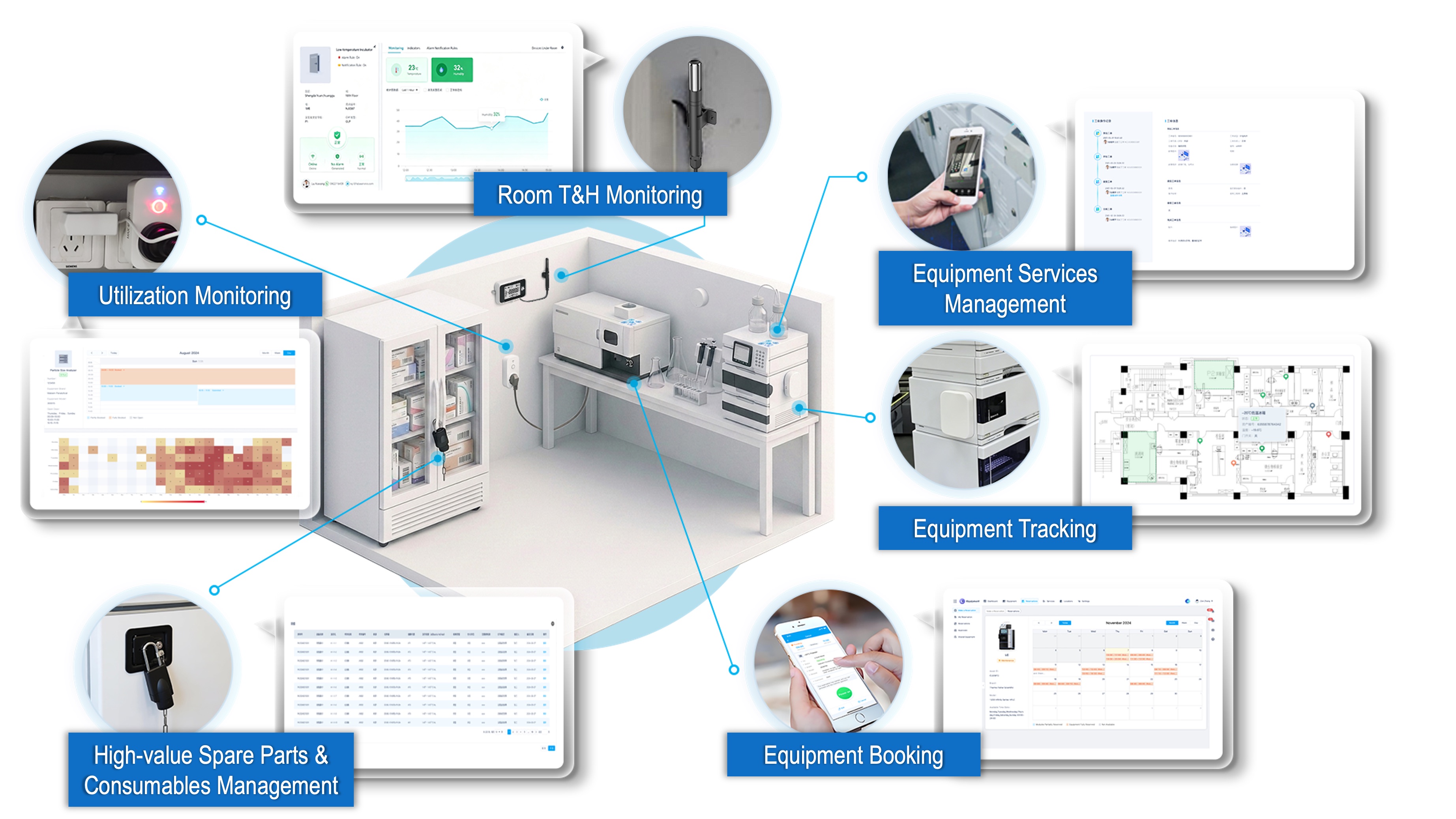
Equipment intelligence
Equipment lifecycle and utilization
Usage, maintenance, booking, downtime, energy, CAPEX justification, and lifecycle evidence.
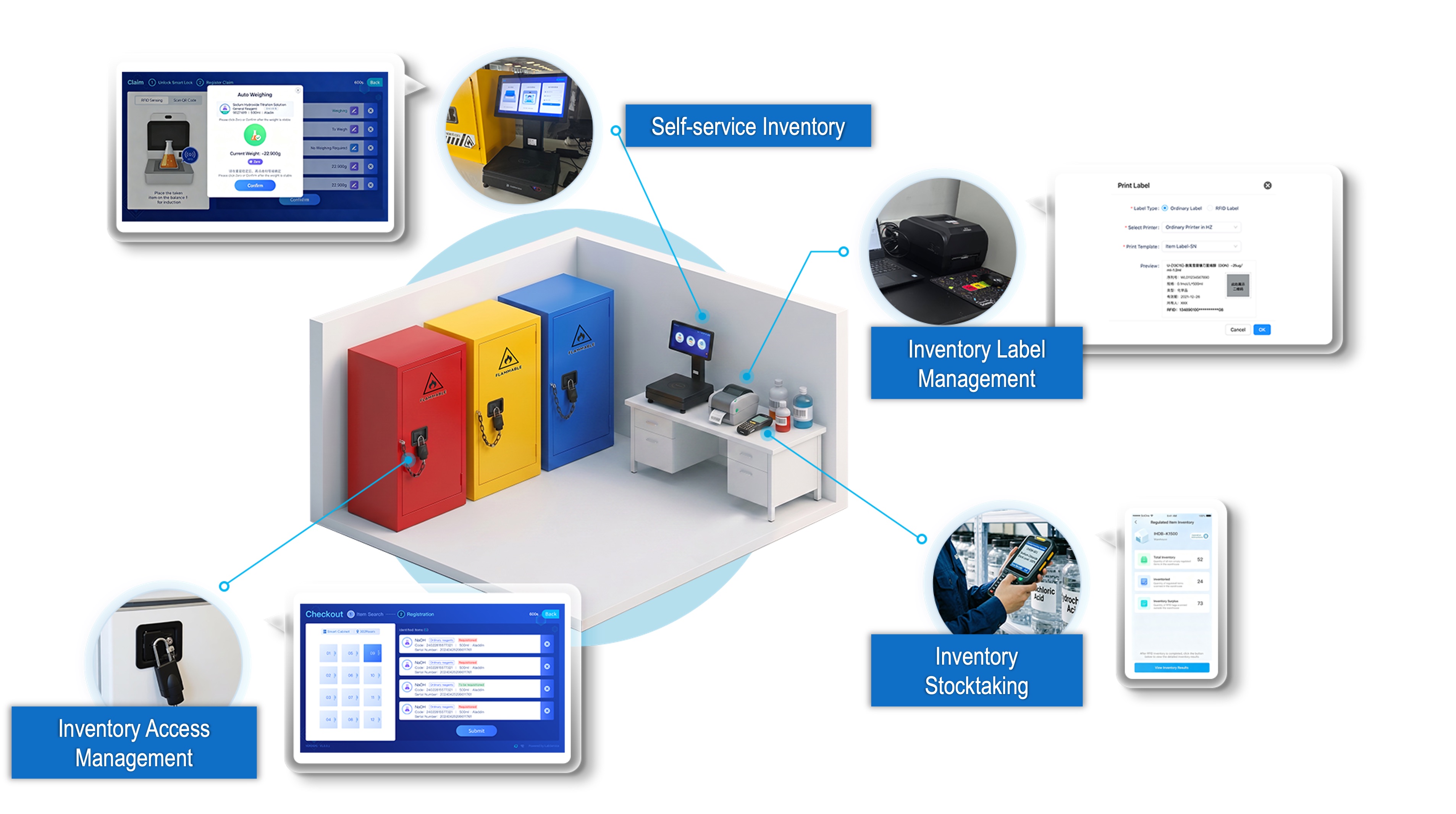
Material governance
Inventory, reagents, and consumables
Traceable stock movement, expiry, access, discrepancy, OPEX exposure, and procurement signals.
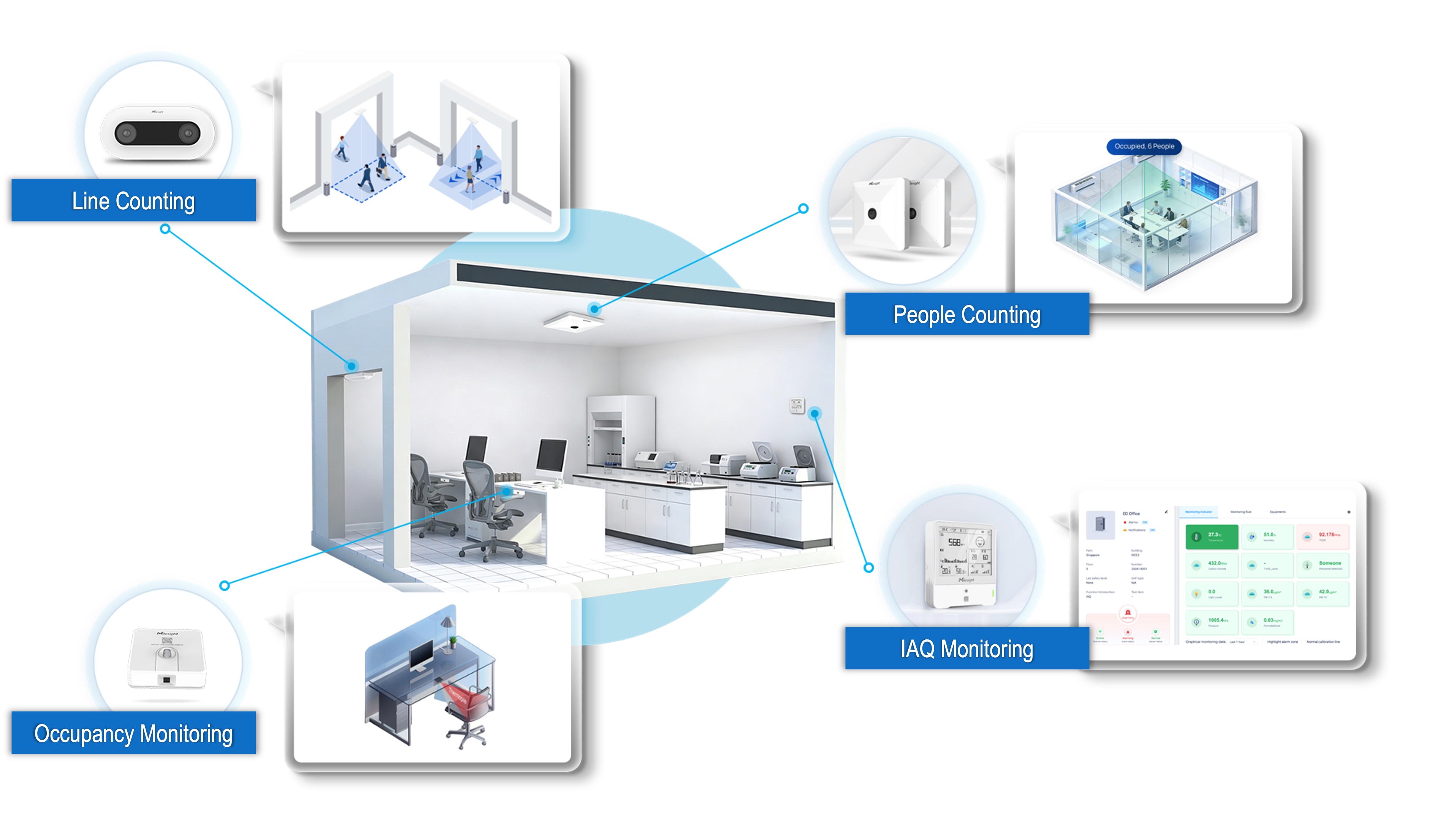
Space intelligence
Space and environmental health
Occupancy, workstation demand, IAQ, capacity, and safety reporting context.
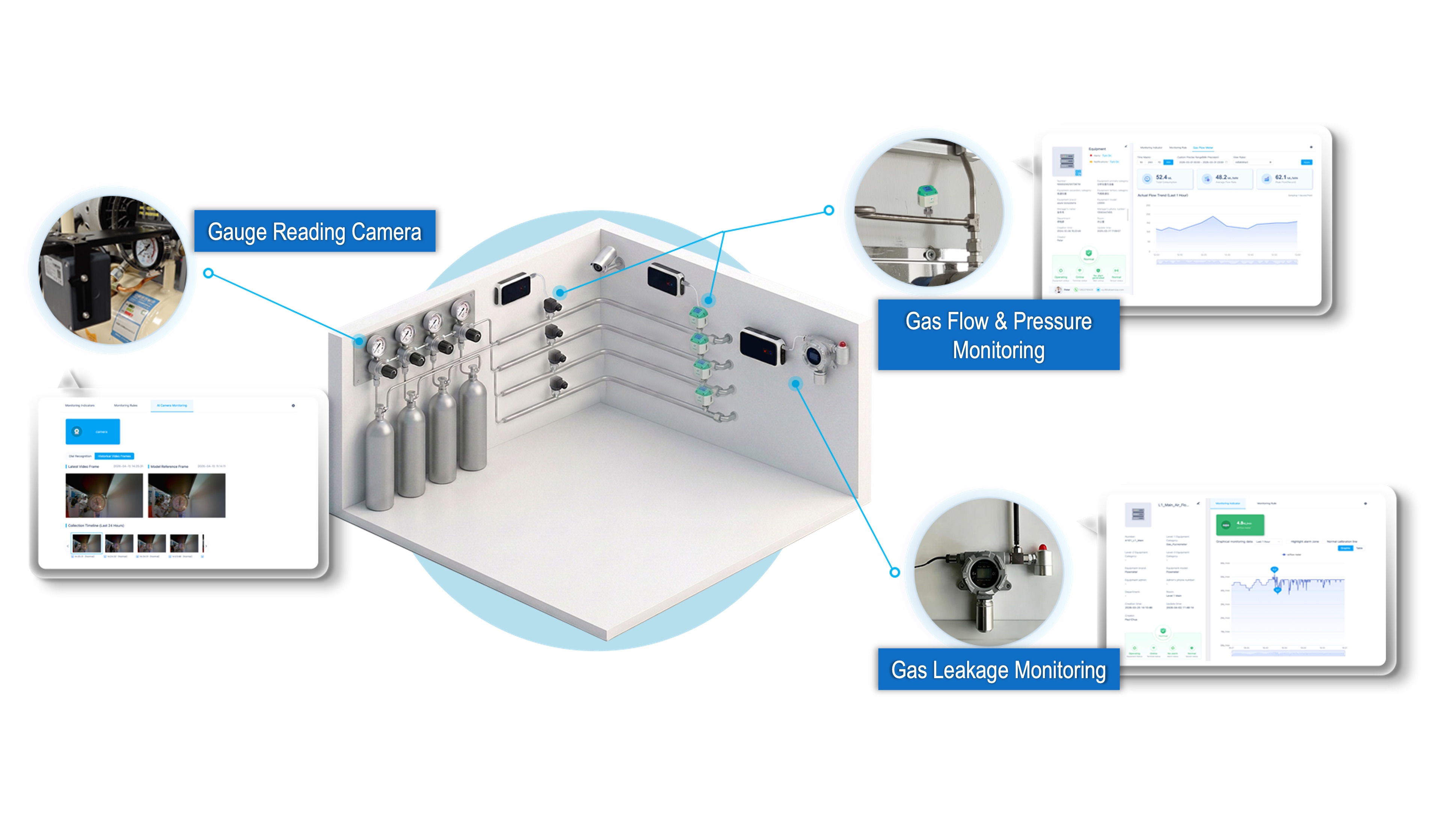
Safety and utilities
Gas safety and refill coordination
Camera gauge reading, cylinder pressure, leak risk, refill workflow, delivery windows, and records.
For lab managers
Turn risk, utilization, and spend into defensible decisions
Lab managers are asked to protect samples, keep teams productive, justify equipment investment, reduce material waste, and explain decisions to QA, finance, EHS, and scientific leaders. iLabService connects those questions to the same physical operating record.
Prove equipment utilization before buying more
Combine booking, power patterns, run time, idle time, service state, and downtime to see which instruments are overloaded, underused, or ready for sharing.
Equipment utilizationOptimize inventory and procurement from real demand
Use stock movement, expiry exposure, late returns, threshold triggers, and procurement history to reduce overstock, rush orders, and manual counting cycles.
Inventory and procurementTurn operations data into management choices
See which freezer room, instrument group, material category, or site needs action first, with evidence tied to risk, cost, utilization, and response readiness.
Scenario libraryDefend the decision after the fact
Keep the same record usable for operational review, finance justification, audit questions, EHS follow-up, and expansion planning.
Manual vs AIoT modeComplete Lab Manager operating path
Move from first-risk review to a defensible operating plan
Use this path when the question is not only "can we monitor it?" but also "can we justify action, budget, and ownership from the same record?"
- 1Map the highest-risk scene
Start with freezer, cryo, equipment, inventory, space, or gas operations that still depend on manual checks.
- 2Attach utilization and spend signals
Connect bookings, power patterns, stock movement, expiry risk, procurement timing, and service history.
- 3Assign ownership and evidence
Define who acts, who reviews, and which record supports QA, finance, EHS, and expansion decisions.
For QA / Compliance
Start with records QA can trust during review
Alarm records alone are not enough for QA and compliance review. The record should show attributable actions, controlled review workflows, validation evidence, and a complete event story that can survive audit questions.
Can every event show who acted and when?
Review source signals, alert delivery, acknowledgement, escalation, corrective action, reviewer status, and export history in one record.
Are monitoring records ALCOA+ aligned?
Check whether physical signals and user actions are attributable, contemporaneous, source-linked, enduring, and available for review.
Can the first deployment be approved with confidence?
Map sensor configuration, threshold rationale, IQ/OQ/PQ-style checks, SOP ownership, access control, and change-control expectations.
For EHS
Connect safety signals to response ownership and near-miss evidence
Safety records should show which gas, oxygen, waste, space, or incident signal changed, who was notified, what action was taken, and whether the follow-up record is complete enough for internal reporting.
Can the record show the hazard, threshold, and response route?
Track cylinder pressure, gas-specific alarms, oxygen deficiency or enrichment risk, and supplier refill follow-up.
Can the near-miss record stay connected without manual stitching?
Keep alarms, acknowledgement, escalation, corrective action, and EHS notes connected to the same physical event.
Can safety operations produce usable reporting evidence?
Connect waste, IAQ, occupancy, and controlled-space events to ownership, response history, and review status.
EHS landing path
From safety signal to reportable operating evidence
The EHS path now has a clearer handoff: identify the hazard scene, define local and digital response, connect incident or near-miss notes, then keep the record usable for EHS, facilities, QA, and lab leadership.
- 1Define the hazard scene
Gas room, cryo area, fume hood, waste point, controlled room, or utility line.
- 2Route the response
Local alarm, digital alert, acknowledgement, escalation, supplier refill, or corrective follow-up.
- 3Preserve the evidence
Threshold, signal history, owner, action, review state, and follow-up checks stay connected.
For PI / Scientists
Reconstruct the lab operating records behind failed experiments
When a cell culture run fails, a freezer exposure goes unnoticed, or an incubator drifts over the weekend, PIs and scientists need more than final records. They need to see whether CO2, temperature, humidity, door disturbance, equipment state, storage exposure, or operator actions explain the result.
What happened while the assay was running?
Review condition drift, disturbance, equipment state, and response records across the relevant time window.
Can the physical conditions be cited?
Use structured environmental and equipment context to support methods documentation and reproducibility review.
Can hidden operating variables be scored?
Compare runs against storage, equipment, environment, material, and operator histories that are usually missing.
First rollout, then rhythm
Make the first deployment concrete enough to prove
Start with one room or workflow where an incident would matter. Prove the response record, then expand when another workflow requires the same evidence.