High physical risk
Temperature drift, cryogenic storage depletion, gas events, door openings, power issues, and equipment failures can directly affect regulated work.
 Book demo
Platform / Laboratory AIoT operations
iLabService gives regulated labs a practical platform for daily operations. It connects monitoring signals, local response, workflows, and audit-ready records so teams can see what happened, who responded, and which evidence supports the decision.
Why labs first
Regulated labs need a stack that captures physical state, keeps local response available, governs daily work, and turns operating records into assets beyond a single monitoring dashboard.
Temperature drift, cryogenic storage depletion, gas events, door openings, power issues, and equipment failures can directly affect regulated work.
Freezer checks, inventory counts, equipment booking, utilization review, procurement follow-up, training records, waste handling, and audit prep still rely heavily on people.
Events need traceable records, responsible people, response history, and evidence that can survive audit review.
Operating model
The platform starts at the lab floor. Physical signals are captured close to the work, local rules and edge response keep sites operating, lab workflows govern daily action, and evidence records turn events into shared operating records.
Contextual operating data supports anomaly detection, prediction, utilization planning, procurement optimization, reproducibility review, automation, and scientific decision support.
Time-stamped, auditable context connects assets, locations, samples, materials, people, actions, thresholds, and response history.
Guardian, Equipment, Inventory, Samples, Space, Procurement, Qualification, and Waste bind signals to daily regulated workflows. View the software catalog.
Offline-first edge nodes run protocol adaptation, local rules, agents, buffering, distributed coordination, and edge AI compute before data leaves the site.
Sensors, meters, access devices, smart cabinets, adapters, labels, and workflow terminals capture lab signals close to the work.
Temperature, humidity, CO2, cryo storage, gas, camera gauge readings, power, freezer compressor status, door, occupancy, equipment state, and material movement.
Map signals to assets, rooms, samples, reagents, people, policies, experiment windows, and response ownership.
Create alerts, tasks, escalation paths, audit records, exception reviews, and structured evidence for regulated teams.
Operational evidence
The platform creates operational clarity: conditions, assets, samples, materials, people, and response history become records that regulated teams can trust during incident review, QA follow-up, EHS reporting, utilization planning, and procurement decisions.
Start from one scene. Prove one operating record, then expand into the adjacent workflows that need the same evidence.
Start with a scenario Review compliance readinessRegulated deployment readiness
iLabService does not replace a customer's validation responsibility. It provides structured product, deployment, and evidence artifacts that teams can assess within their own quality system.
Deployment records, configuration evidence, sensor mappings, test scripts, and operating checks can support customer validation packages.
Time-stamped source context, user actions, review trails, and event histories help QA evaluate attributable and reviewable evidence.
Lab operating records can be connected with existing lab records, instrument files, and notebook workflows rather than replacing them.
iLabService supports deployment planning around customer data-residency requirements, with region, access, export, retention, and integration boundaries defined before rollout.
Expansion logic
The lab wedge proves the core architecture: capture physical state, contextualize it against assets and people, govern the response, and make the resulting data computable. That pattern applies to other regulated operations where physical state and evidence matter.
Freezers, cryo storage, gas, inventory, samples, equipment, people qualifications, waste, and audit workflows.
Signals become structured context tied to assets, locations, people, events, workflows, and records.
Extend the same layer into other environments where safety, compliance, uptime, and operational evidence are critical.
Integrated command center
Command-center views bring equipment, inventory, rooms, environmental conditions, gas supply, booking, service, alerts, and response records into one operating layer instead of leaving each lab operating records in a separate dashboard.
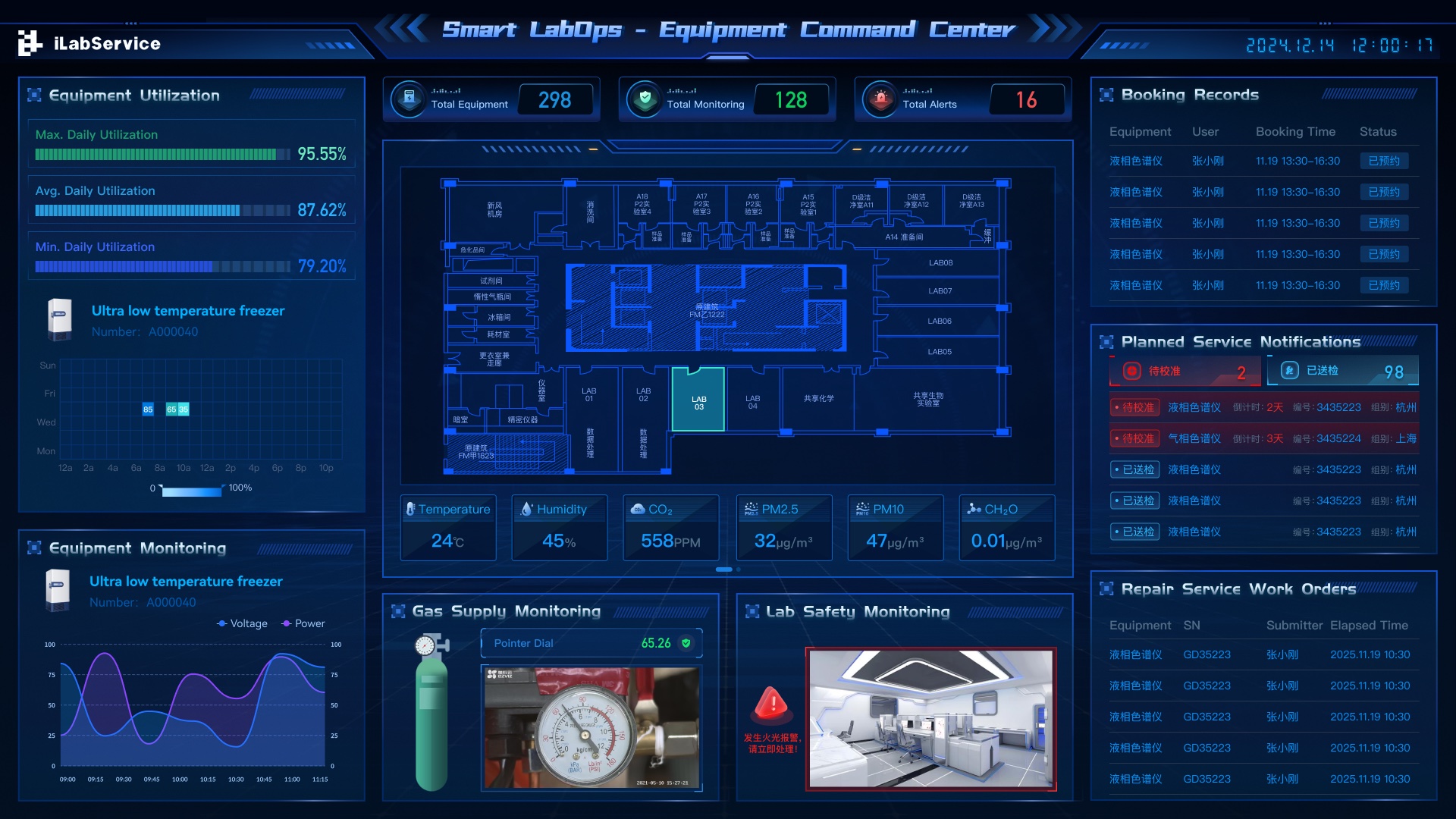
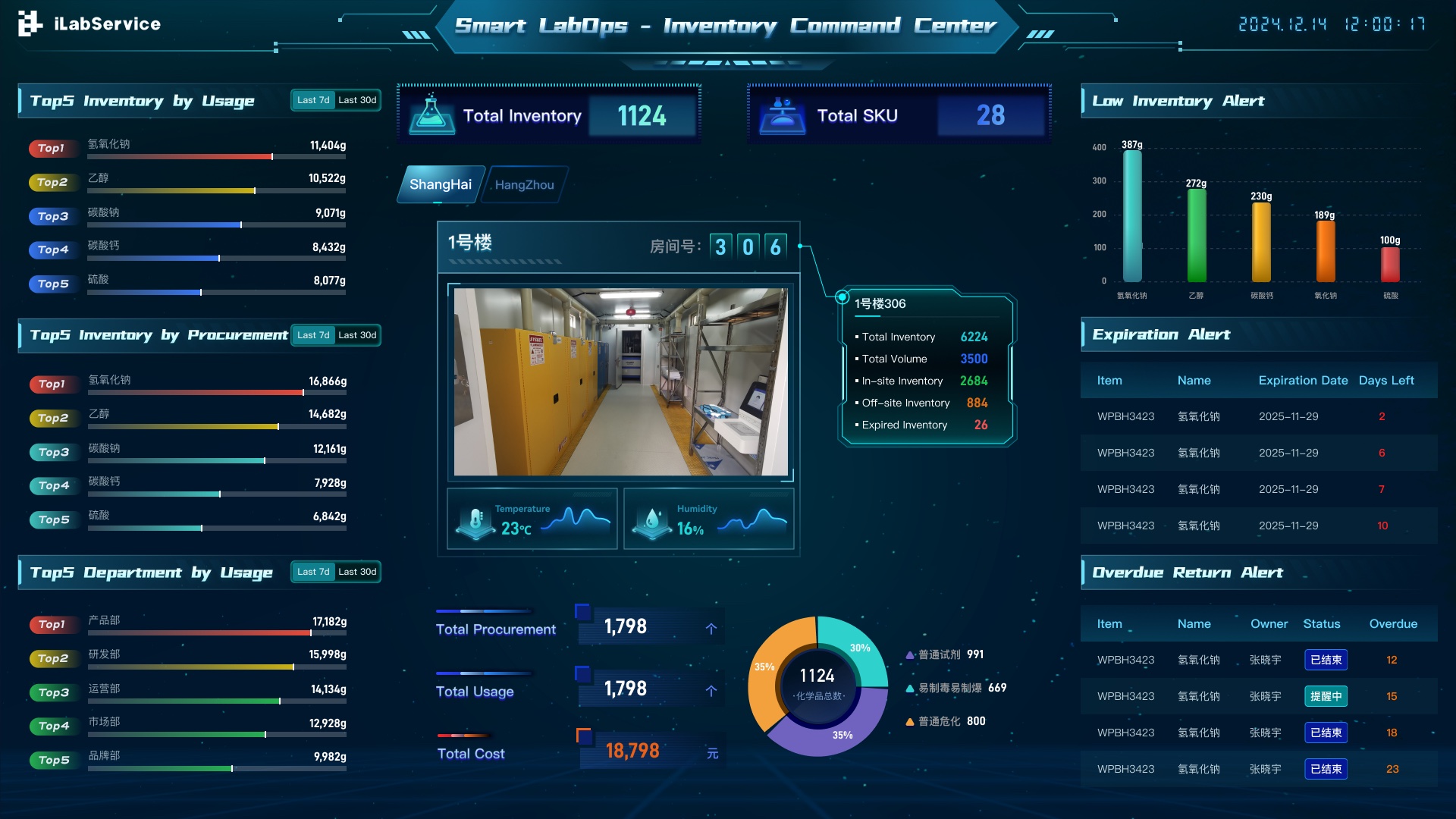
Temperature, humidity, CO2, gas, camera gauge readings, door, power, asset state, and inventory movement become live operating records.
Bookings, work orders, refill tasks, service notifications, and response actions are tied back to the physical event.
Teams can move from a room or device view into alerts, exceptions, reviews, and audit-ready records without rebuilding the timeline.
Equipment, inventory, environment, safety, and utilization data become a shared basis for dashboards, reviews, and management decisions.